HomeSubjects0

Families of Instruments

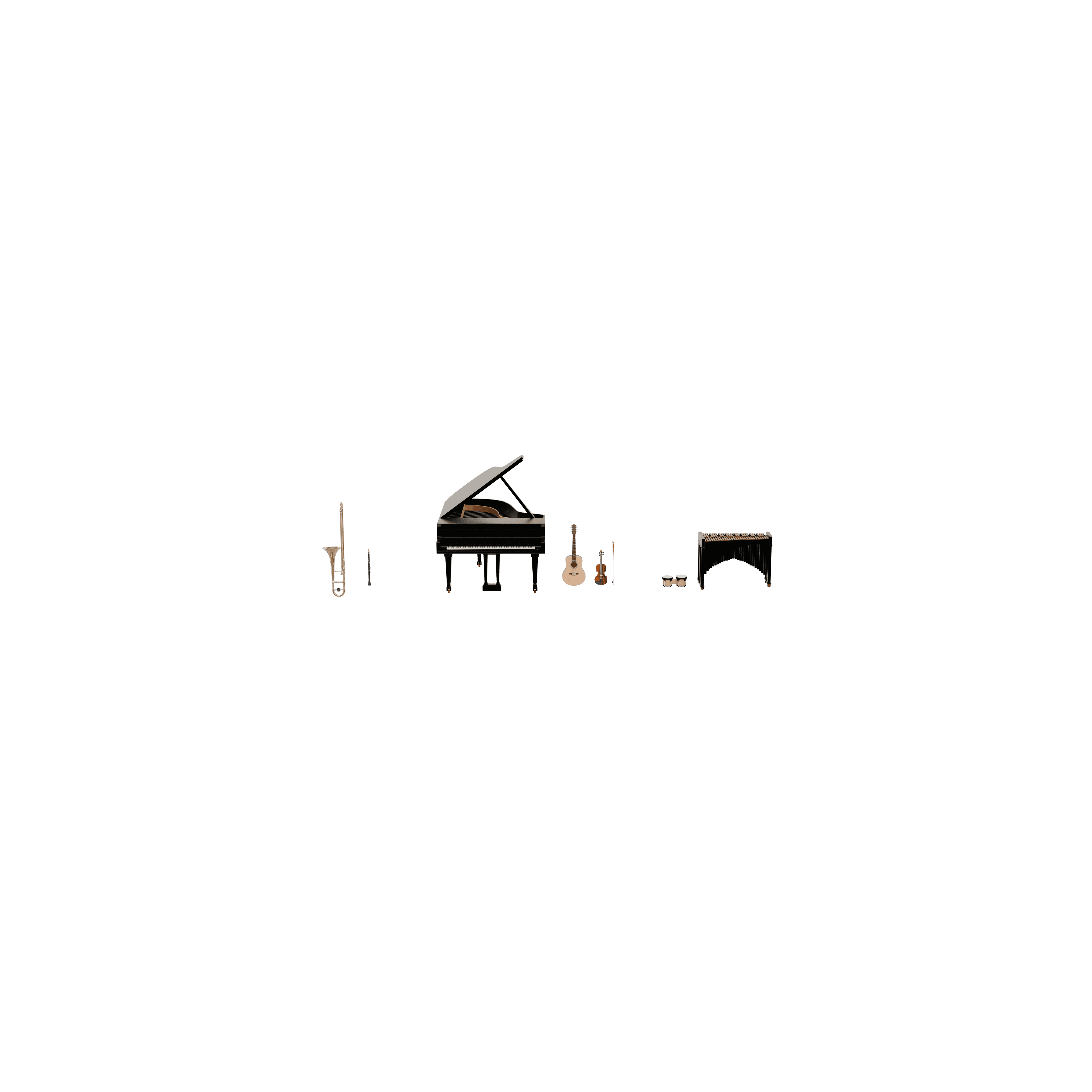
This model presents the main families of musical instruments: wind, string, and percussion. Each step illustrates how these instruments produce their sounds. This model was created with the support of the International School of Monaco (ISM).

Available with a subscription
Questions about this 3D model

Families of Instruments

How are musical instruments classified?

The Hornbostel-Sachs system, used by scholars, sorts instruments by the way they make sound. Idiophones vibrate their own body (xylophone, rattle), membranophones vibrate a stretched skin (drums), chordophones vibrate strings, and aerophones vibrate a column of air (flutes). The familiar families match these groups: string instruments are chordophones, wind instruments are aerophones, and percussion covers idiophones and membranophones.

Why do instruments have a tube or a sounding box?

Wind instruments use the resonance of their air column to amplify the tones made by the lips or a reed, and violins and guitars use their sounding box to amplify and enrich the vibration of their strings. In a tube closed at one end, the lowest note has a wavelength four times the length of the tube, so a longer tube plays a lower note.

Sources

  • Wikipedia: Musical instrument
  • OpenStax: Sound Interference and Resonance, College Physics 2e

© 2026 Foxar