HomeSubjects0

Composition of Orchestra

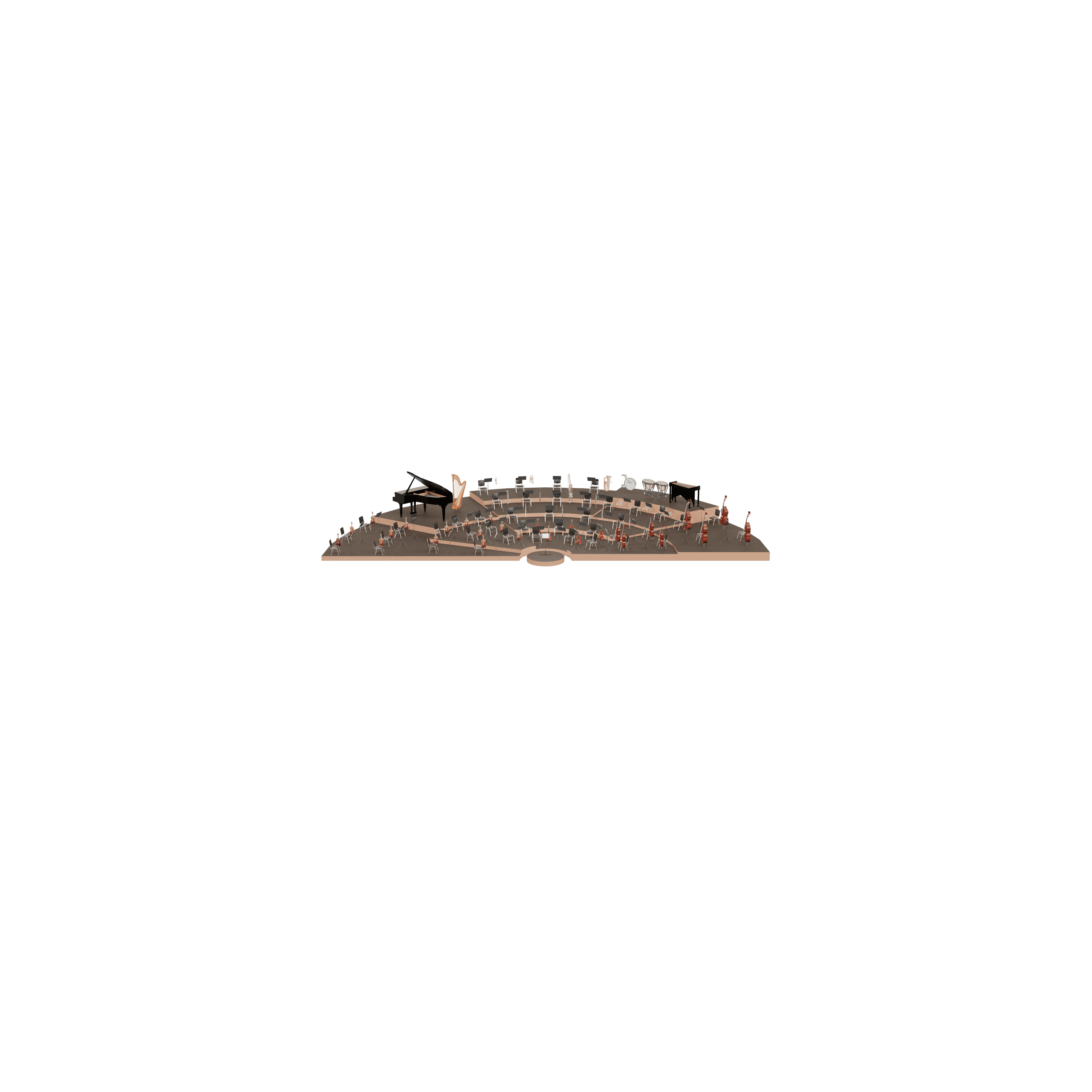
This model invites you to discover the composition of an orchestra. Step by step, it presents the different families of instruments, their role, and their place around the conductor. This model was created with the support of the International School of Monaco (ISM).
Composition of Orchestra

Questions about this 3D model

Composition of Orchestra

What are the sections of an orchestra?

An orchestra usually has four main sections: the strings (violin, viola, cello and double bass), the woodwinds (flute, oboe, clarinet and bassoon), the brass (horn, trumpet, trombone and tuba) and the percussion (timpani, snare drum, bass drum, cymbals, triangle and others). A harp, and sometimes keyboard instruments such as the piano, can be added.

How many musicians are in a symphony orchestra, and what does the conductor do?

A full symphony orchestra can have from seventy to more than a hundred musicians, depending on the work; some works by Wagner and Mahler call for up to 120 players. The conductor leads the performance with movements of the hands and arms, often with a baton, sets the tempo, shapes the sound and prepares the orchestra in rehearsals.

Sources

  • Wikipedia: Orchestra

© 2026 Foxar